LONG-TERM SAFETY AND EFFECTIVENESS
OF LIRAGLUTIDE AFTER BARIATRIC SURGERY
IN A REAL-WORLD SETTING IN CHILE
Farías MM¹ | ¹Nuclinic Medical Clinic, Las Condes, Santiago, Chile
OBJECTIVES
To describe the safety and effectiveness (relative change in body weight) among Chilean patients receiving liraglutide after bariatric surgery (BS) in a real-world setting.
INTRODUCTION
Sustainable weight loss and improvement and/or resolution of metabolic comorbidities are strong benefits of bariatric surgery (BS).¹
Nevertheless, irrespective of initially successful weight loss, weight regain may occur during long-term follow-up and a relevant proportion of patients fail to reach or maintain their target weight goals.²
Liraglutide is a therapy aimed to avoid weight regain.3 Liraglutide had no insurance coverage as a treatment for obesity in Chile and all patients pay for their own treatment.
BASELINE CHARACTERISTICS
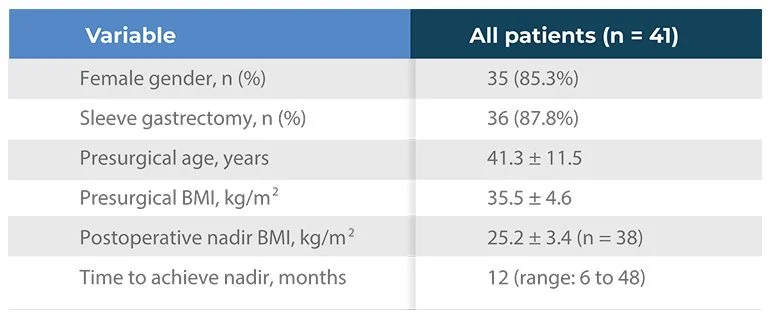
Table 1. Main demographic data
Dropout rates were consistent with usual treatment practice of people living with obesity
KEY SAFETY RESULTS
Forty-one participants were included in the study.
Treatment with liraglutide was well tolerated; no mortality cases or major complications were observed.
Six mild gastrointestinal adverse events were reported by 5 patients (12.2%; abdominal discomfort, n = 3; reflux, n = 2; constipation, n = 1).
No gastrointestinal adverse events led to treatment interruption.
After 12 months of treatment, one patient required cholecystectomy due to cholelithiasis.
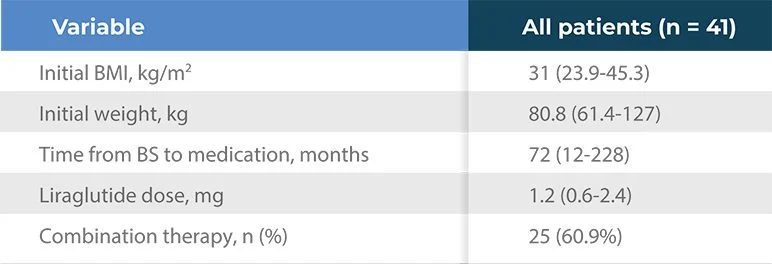
Table 2. Liraglutide treatment
All values are median (range), excepting when specified
STUDY DESIGN
Retrospective, observational, single-arm, pre-post study including patients who had initiated liraglutide between 2017 and 2020 from a single obesity physician’s private practice in Santiago, Chile.
The inclusion criteria were (1) patients who assisted for pharmacological treatment of obesity after a minimum 3-month follow-up period after starting liraglutide treatment following a Roux-en-Y gastric bypass (RYGB) or sleeve gastrectomy (SG) at different Chilean medical centers; (2) at least one control visit after liraglutide treatment start.
Liraglutide dose was defined as the maximum dose that could tolerated and afforded during the follow-up period.
Clinical perception of hunger sensation, satiation, satiety and emotional eating was considered for increasing liraglutide dose or adding a second drug in subject who did not tolerate increasing doses of liraglutide or could not afford treatment costs.
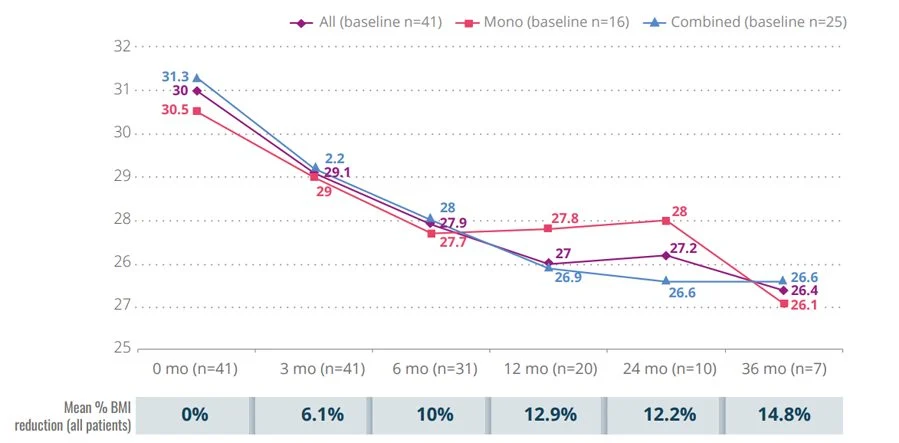
Figure 1. Mean BMI variation from baseline during follow-up
KEY EFFECTIVENESS RESULTS
Liraglutide administration was associated with mean weight loss rates from baseline at 3, 6, 12, 24, and 36 months of 5%, 7.7%, 7.6%, 5.8%, and 5.1%, respectively.
Mean body mass index reduction reached 14.8% at 36 months.
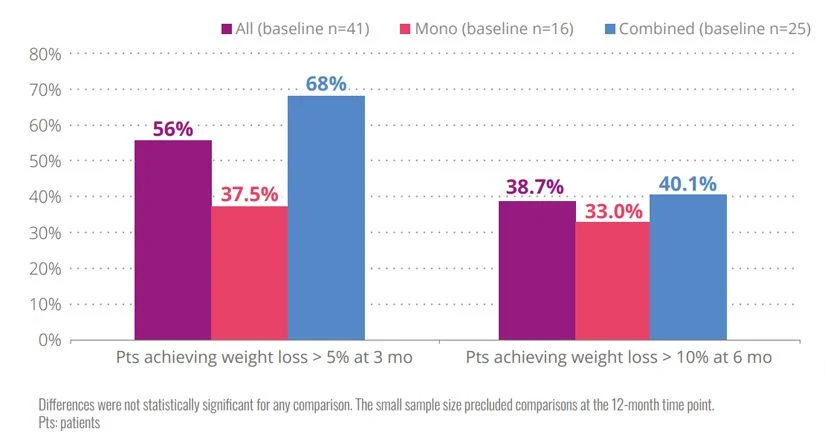
Results were similar for monotherapy or combined therapy without significant differences at any point.
Figure 2. Patients achieving weight loss according to treatment
CONCLUSION
Liraglutide, as a monotherapy or combined with other pharmacological strategies, is a safe and effective treatment to maintain weight reduction and avoid weight regain in BS patients attending routine clinical care in a Chilean setting.
REFERENCES: 1. Stenberg E, Dos Reis Falcão LF, O’Kane M, et al. Guidelines for Perioperative Care in Bariatric Surgery: Enhanced Recovery After Surgery (ERAS) Society Recommendations: A 2021 Update. World J Surg. 2022; 46(4):729-51; 2. Elhag W AW. Weight Regain and Insufficient Weight Loss after Bariatric Surgery: A Call for Action. In: Saiz-Sapena N (ed). Bariatric Surgery – From the Non-Surgical Approach to the Post-Surgery Individual Care [Internet]. London: IntechOpen; 2020. Available at: https://www.intechopen.com/chapters/74559; 3. Alruwaili H, Dehestani B, Le Roux CW. Clinical Impact of Liraglutide as a Treatment of Obesity. Clin Pharmacol Adv Appl. 2021;13:53-60
Conflict of interests as declared by the author: Maria Magdalena Farías has received honoraria as speaker from Novo Nordisk. Medical writing support was provided by Agencia Médica and funded by Novo Nordis
Usamos cookies propias para el funcionamiento del sitio y, con tu permiso, cookies de análisis y marketing para entender cómo se usa y mejorar tu experiencia. Puedes aceptarlas, rechazarlas o elegir cuáles permitir. Lee más en nuestra Política de cookies.